
You’ve probably heard the standard line about porcelain veneers. They last 10 to 15 years, sometimes longer. That’s true, but it’s not the whole story.
The real story is more interesting. Research shows porcelain veneers can last 15 to 25 years in the right patients. Systematic reviews report survival rates of 93 to 95 percent at 15 years. That’s impressive.
The difference between a veneer that lasts 20 years and one that fails in 5 usually comes down to factors that aren’t discussed during a typical cosmetic consultation.
At West Ashley Family Dentistry in Charleston, SC, Dr. Agatha Lynn and Dr. James Dickert take a different approach. Dr. Lynn’s advanced training at the Dawson Academy, where she received the Concept of Complete Dentistry Award, means she evaluates your entire chewing system before recommending veneers. That training changes how she plans treatment. That’s why her patients get long-lasting results. Let’s talk about what actually determines porcelain veneer longevity.
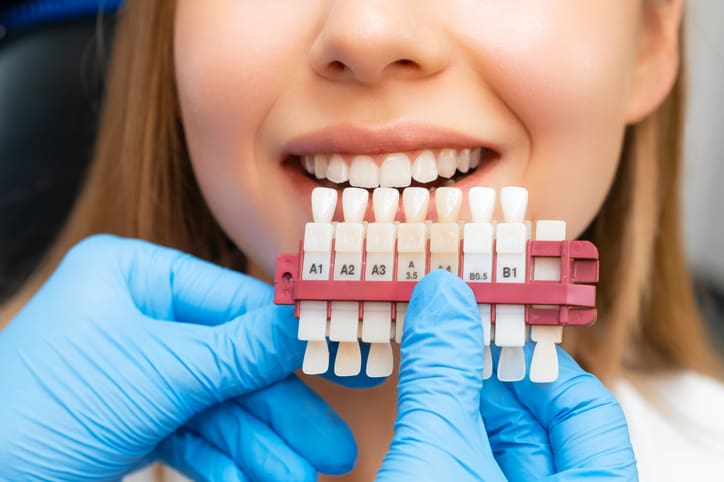
The Numbers You Haven’t Heard
First, let’s establish the baseline. Porcelain veneers have an excellent track record. Research consistently shows survival rates exceeding 90 percent at 10 to 15 years.
But those numbers assume ideal conditions. They assume the patient doesn’t grind their teeth and their bite is stable. They assume the veneers were placed with meticulous technique. When those conditions aren’t met, the numbers change dramatically.
Here’s the statistic that doesn’t get shared enough. Patients with documented bruxism, which is teeth grinding and clenching, demonstrate approximately 60 to 70 percent veneer fracture rates over ten years. That’s compared to just 7 percent in non-grinding populations.
Think about that. The difference between a veneer that lasts decades and one that fails in a few years comes down to your bite.
Why Grinding Destroys Veneers
Grinding and clenching create forces that your teeth weren’t designed to handle repeatedly. These forces get transferred to your veneers. Porcelain is strong, but it’s also rigid. It doesn’t flex the way natural tooth structure does.
When you grind, you create repetitive stress on the veneer-tooth interface. The cement that holds your veneer in place can break down. The porcelain itself can crack or fracture. Because veneers are bonded to the front of your teeth, they’re especially vulnerable to the lateral forces created during grinding.
The Dawson Academy teaches that understanding occlusion is critical for the long-term success of cosmetic cases. Dr. Lynn’s training includes learning the ten factors critical to a stable occlusion and how applying them leads to long-term success. She can identify patients at risk of future instability before treatment begins. Not every cosmetic dentist does this. It’s a specialized skill.
The Cement Factor Most Patients Never Consider
Another factor that affects veneer longevity is the cement. Veneers are bonded to your teeth with resin cement. Research shows that the elastic modulus of that cement affects how stress is distributed across the veneer, the adhesive layer, and your tooth structure.
When the cement’s properties don’t match well with the surrounding materials, stress concentrates at the interfaces. This can lead to debonding or fracture. Studies show that choosing the right cement for the specific clinical situation matters for restoration longevity.
Dr. Lynn and Dr. Dickert understand these material science principles. Their training and experience guide them in selecting the right materials for each patient’s unique situation.
What Determines Veneer Longevity
Let’s break down the factors that actually matter for how long your veneers last:
- Your Bite: This is the biggest factor. An unstable bite creates uneven forces that concentrate on certain teeth. Those forces damage veneers over time. Dr. Lynn’s Dawson training gives her the expertise to evaluate your bite and address problems before placing veneers.
- Grinding and Clenching: If you grind your teeth, you need protection. A custom night guard reduces veneer fracture incidence by about 80 to 90 percent. That’s the single most effective protective intervention available.
- Cement and Bonding Technique: Proper surface preparation and the right cement selection create a durable bond. Research shows that comprehensive surface preparation dramatically reduces adhesive failures.
- Veneer Thickness and Preparation Design: Research shows that porcelain veneers bonded to enamel are substantially stronger than those bonded to dentin. Increased porcelain thickness also improves strength when bonded to enamel. This is why conservative preparation that preserves enamel matters.
- Oral Hygiene: Secondary caries, or decay at the veneer margins, accounts for 3 to 7 percent of failures over ten years. Good oral hygiene reduces this risk.
- Regular Professional Care: Annual clinical assessments identify incipient debonding, marginal defects, and occlusal interferences before they become major problems.
Why Dr. Lynn and Dr. Dickert Approach Veneers Differently
At West Ashley Family Dentistry, veneers aren’t just cosmetic. They’re part of a comprehensive approach to your oral health.
Dr. Lynn received the Dawson Academy’s Concept of Complete Dentistry Award for her study of occlusion and cosmetic smile design. She also served as faculty at MUSC College of Dental Medicine with an emphasis on restorative dentistry and implants.
Dr. Dickert also completed advanced training at the Dawson Academy as well. Together, they bring a level of expertise that’s rare in Charleston cosmetic dentistry.
When you come in for a veneer consultation, they don’t just look at the teeth you want to change. They evaluate your bite, check for signs of grinding, and examine how your teeth come together and how forces are distributed.
If they find problems, they address them before placing veneers. This might mean recommending a night guard. It might mean adjusting your bite. It might mean choosing a different treatment approach entirely. This takes more time up front, but it saves you from premature veneer failure down the road.
Serving Charleston and Surrounding Communities
West Ashley Family Dentistry is conveniently located at 811 St. Andrews Blvd, Ste B in Charleston, SC. We proudly serve patients from:
- West Ashley
- Ashley Harbor
- Woodlawn
- Wagner Terrace
- Stiles Point
- And across Charleston County
Our office is easy to find and offers convenient parking.
Schedule Your Cosmetic Consultation
If you’re considering porcelain veneers, don’t settle for a dentist who only looks at the teeth. Choose a cosmetic dentist who understands how your entire chewing system works together.
Dr. Lynn and Dr. Dickert at West Ashley Family Dentistry are ready to help. They’ll evaluate your bite, discuss your options, and create a personalized treatment plan. You’ll get veneers that look natural, feel comfortable, and last for years.
Call (843) 371-5480 or request an appointment online. Let us show you what a Dawson-trained approach to cosmetic dentistry looks like.
Your smile deserves more than beautiful veneers. It deserves a bite that supports them for life.