
You show up for your regular cleaning. You sit in the chair and open wide. The dentist pokes around a little, says everything looks good, and you’re on your way. Sound familiar?
A lot of patients leave their dental exams without really understanding what just happened or why it mattered. And honestly, that’s on us as dental professionals. We get so used to doing the same exam dozens of times a day that we forget to explain what we’re actually looking for.
So let’s fix that. Here’s a behind-the-scenes look at what happens during a dental exam at West Ashley Family Dentistry and why each part matters for your health. If you’re looking for a dentist in Charleston, SC, who takes the time to explain your care, we’re here to help.
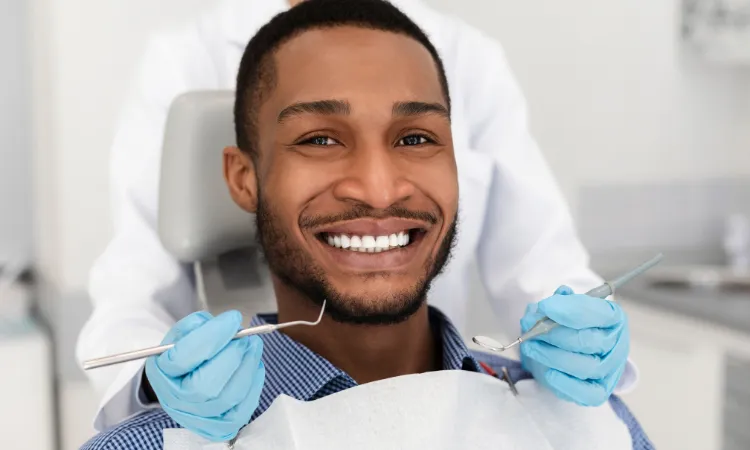
More Than Just “Counting Teeth”
When Dr. Dickert or Dr. Lynn sits down to examine you, they’re not just checking for cavities. They’re looking at your mouth as a whole system. This is the complete dentistry training we talk about. It’s an approach that considers how your teeth, gums, jaw joints, and bite all work together.
Here’s what’s actually happening during those few minutes:
1. Periodontal Screening (Gum Check)
You know that little probe we use to measure around each tooth? We’re checking the depth of the pockets between your teeth and gums. Shallow pockets are healthy. Deep pockets can mean gum disease is sneaking in. Most people don’t feel early gum disease, so this measurement catches it before you notice a problem.
Healthy pocket depths are typically 1-3 millimeters. Depths of 4 millimeters or more may indicate gingivitis or periodontitis. This screening is quick, painless, and essential for preventing tooth loss.
2. Oral Cancer Screening
This takes about 60 seconds and could save your life. We’re looking at your lips, cheeks, tongue, roof of your mouth, and throat for any unusual spots, lumps, or color changes. Oral cancer is highly treatable when caught early. This screening is quick, painless, and part of every routine exam.
Each year, over 50,000 Americans are diagnosed with oral cancer. Early detection dramatically improves survival rates. We check for red or white patches, sores that don’t heal, and any unusual textures or growths.
3. Occlusal Analysis (Bite Check)
This one surprises most patients. We’re watching how your teeth come together when you bite down. Do some teeth hit too hard? Are others not touching at all? An uneven bite can lead to worn teeth, jaw pain, and even headaches. Catching it early means we can address it with a simple adjustment rather than bigger problems.
We may use articulating paper to see where your teeth are making contact. This helps us identify areas of excessive force that could be causing wear or discomfort.
4. Tooth-by-Tooth Exam
Yes, we check for cavities. But we’re also looking for chips, worn spots, old fillings that are breaking down, and signs that you might be grinding your teeth at night. Each tooth tells a story about how you eat, sleep, and even handle stress.
We use a small mirror and explorer (that’s the little hooked tool) to check for:
- Decay: Soft spots or cavities that may need treatment
- Cracks or fractures: Tiny lines that could indicate stress
- Worn enamel: A sign of teeth grinding (bruxism)
- Failing restorations: Old fillings or crowns that may need replacement
- Discoloration: Could indicate underlying issues
5. Digital X-Rays (As Needed)
X-rays help us see what’s happening below the surface. We can spot cavities between teeth, bone loss from gum disease, impacted teeth, and infections at the root tip. Digital X-rays use significantly less radiation than traditional film and provide instant images.
We typically recommend X-rays once a year for most patients, or more frequently if you have a higher risk of decay or gum disease.
6. Review of Your Medical History
Your dental health is connected to your overall health. We review any changes in your medical history, medications, or health conditions. Conditions like diabetes, heart disease, and autoimmune disorders can affect your oral health, and certain medications can cause dry mouth or other side effects.
The “Why” Behind Twice-a-Year Visits
Dental problems usually don’t hurt until they’re already kind of serious. A small cavity? No pain. Early gum disease? You’d never know. The beginning of a fractured tooth? Feels like nothing.
By the time you feel something, that small problem has become a bigger, more expensive, more uncomfortable one.
Regular exams catch things when they’re still small. That’s the whole point. And because we take a conservative approach at our office, we’d much rather help you with a tiny filling now than a root canal later.
What You Can Do Between Visits
Your home care routine is just as important as your professional cleanings. Here’s what we recommend:
- Brush twice a day for two minutes with a soft-bristled toothbrush and fluoride toothpaste.
- Floss daily to remove plaque from between teeth and under the gumline.
- Use an antimicrobial mouthwash to help reduce bacteria.
- Stay hydrated to prevent dry mouth.
- Limit sugary snacks and drinks to reduce your risk of cavities.
- Wear a mouthguard if you play sports or grind your teeth at night.
Your Job? Ask Questions.
The best exams are conversations, not just checklists. If you’re curious about something we’re doing, ask. If something feels tender or different from last time, tell us. And if you’ve been having headaches, jaw popping, or sensitive teeth, definitely mention it.
We can’t help with what we don’t know about.
Common questions we hear:
- “Why are my teeth sensitive to cold?”
- “What can I do about my jaw pain?”
- “Is it normal for my gums to bleed?”
- “Why do I grind my teeth at night?”
Ready for an Exam That Actually Makes Sense?
If it’s been a while since your last visit, or if you’ve never really understood what your dentist was doing, come see us. We’ll walk you through every step, answer your questions, and help you leave feeling informed, not just dismissed.
At West Ashley Family Dentistry, we take a comprehensive approach to your oral health. Dr. James Dickert and Dr. Agatha Lynn have completed advanced training at the prestigious Dawson Academy. This means they focus on “complete dentistry,” looking at how your teeth, gums, and bite work together as a single system.
Call (843) 371-5480 or request an appointment online. Your smile works hard for you every day. It deserves a dentist who takes the time to explain what’s going on.
We proudly serve patients from Charleston, West Ashley, Mount Pleasant, Summerville, and all surrounding areas.